Over the last two decades, businesses have experienced several major transformations—from websites and digital marketing to CRM systems and automation. Each wave promised faster growth, better visibility, and stronger customer relationships. Today, the next shift is happening in how businesses follow up with leads.
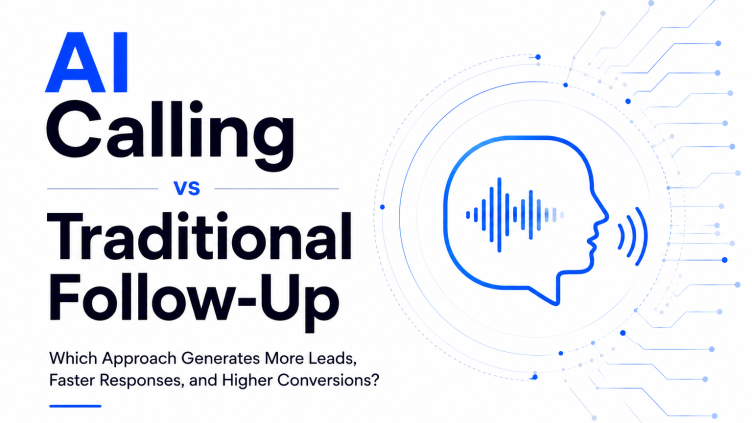
Traditional follow-up relies on manual calls, delayed responses, and inconsistent messaging. AI calling changes that by responding instantly, qualifying leads in real time, and routing hot prospects to the right sales rep without losing momentum.
Why speed matters in lead follow-up
Studies consistently show that responding within the first few minutes dramatically increases conversion rates. When a prospect fills out a form, downloads a brochure, or requests a callback, their intent is highest in that moment. Manual teams often respond hours—or days—later, by which time interest has cooled.
AI calling systems can initiate contact within seconds, ask qualifying questions, capture intent, and schedule appointments automatically. That speed alone can outperform teams that rely on spreadsheets and delayed callbacks.
Traditional follow-up still has a place
Human follow-up remains valuable for complex negotiations, relationship building, and high-value accounts. The best approach is not AI instead of humans—it is AI plus humans. Let automation handle first touch, reminders, and qualification. Let your team focus on closing and strategic conversations.
Which approach converts better?
Businesses using AI calling for initial outreach typically see faster response times, more conversations per rep, and higher meeting-booking rates. Traditional follow-up alone often creates bottlenecks, especially when lead volume spikes.
If your sales pipeline depends on speed, consistency, and scale, AI calling is no longer optional—it is a competitive advantage.
Frequently Asked Questions
Why do businesses lose leads due to slow follow-up?
Businesses often lose potential customers because leads lose interest when they do not receive a quick response. Traditional follow-ups depend on sales teams manually calling, which can create delays. AI Calling helps businesses respond instantly, engage prospects immediately, and reduce missed opportunities.
How quickly should businesses respond to new leads?
The ideal response time is within a few seconds to a few minutes after receiving a lead. Faster responses create better customer experiences and significantly improve the chances of converting leads into paying customers.
Can AI Calling increase lead conversion rates?
Yes, AI Calling can improve conversion rates by contacting leads instantly, answering questions, handling objections, and following up consistently. It ensures every potential customer receives timely communication without depending on manual effort.
How does AI Calling qualify leads automatically?
AI Calling uses intelligent conversations to ask qualifying questions, understand customer requirements, identify buying intent, and categorize leads based on their interest level. This allows sales teams to focus on high-quality prospects.
What is the ROI of AI Calling for service businesses?
AI Calling can improve ROI by reducing missed leads, lowering follow-up costs, increasing appointment bookings, and allowing businesses to handle more customer conversations without increasing team size.
Can AI Calling integrate with CRM platforms?
Yes, AI Calling solutions can integrate with popular CRM platforms to automatically update customer information, track conversations, schedule follow-ups, and maintain accurate lead records.