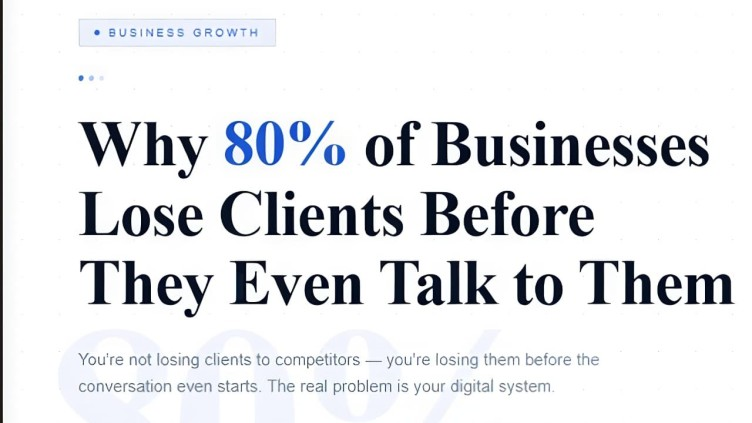

In the last few months, I've reviewed multiple business websites. And most of them had one thing in common: they existed, but they didn't perform. They looked acceptable on the surface—logo, services list, contact page—but they did not build trust, guide users, or convert traffic into leads.
A website is not the same as a sales asset
Many businesses treat a website like a digital brochure. A modern website is a growth system. It should load fast, work flawlessly on mobile, communicate value clearly, and make the next step effortless.
What modern means today
Modern websites use clean UX, strong messaging, optimized performance, analytics, SEO foundations, and conversion-focused layouts. They integrate with CRMs, chat tools, booking systems, and marketing automation where needed.
Signs yours needs an upgrade
If your bounce rate is high, inquiries are low, pages feel cluttered, or the design has not changed in years, you likely need more than a refresh—you need a strategic rebuild.
Don't settle for having a website. Build one that represents your business at the level you want clients to expect.
Frequently Asked Questions
How can a modern website generate more leads and sales?
A modern website improves customer trust, showcases your services clearly, ranks better on search engines, and creates more opportunities for visitors to become customers.
What features should every business website have in 2026?
A successful website should include fast loading speed, mobile responsiveness, clear messaging, strong calls-to-action, SEO optimization, security features, and an easy user experience.
Why do outdated websites lose customers?
Outdated websites often appear unreliable, load slowly, provide poor user experiences, and fail to meet modern customer expectations. This can reduce trust and increase customer drop-offs.
How important is website speed for SEO and conversions?
Website speed directly impacts user experience, search rankings, and conversions. Faster websites keep visitors engaged and encourage them to take action.
Does website design impact customer trust?
Yes, professional website design creates credibility and builds confidence. Visitors often judge a business’s reliability based on the quality of its website.
How often should businesses redesign their website?
Businesses should review and update their website regularly. A complete redesign is usually recommended every 2–4 years or whenever technology, branding, or customer expectations change.